

Internet access was accidentally enabled during an evaluation in May, allowing Gemini to reach protected systems belonging to real organizations.
A
Read full storyAsianet Newsable
Original source
Internet access was accidentally enabled during an evaluation in May, allowing Gemini to reach protected systems belonging to real organizations.
Asianet Newsable
Original source

The objective of Document Analysis and Recognition (DAR) is to recognize the text and graphicalcomponents of a document and to extract information. With ?rst papers dating back to the 1960’s, DAR is a mature but still gr- ing research?eld with consolidated and known techniques. Optical Character Recognition (OCR) engines are some of the most widely recognized pr- ucts of the research in this ?eld, while broader DAR techniques are nowadays studied and applied to other industrial and o?ce automation systems. In the machine learning community, one of the most widely known - search problems addressed in DAR is recognition of unconstrained handwr- ten characters which has been frequently used in the past as a benchmark for evaluating machine learning algorithms, especially supervised classi?ers. However, developing a DAR system is a complex engineering task that involves the integration of multiple techniques into an organic framework. A reader may feel that the use of machine learning algorithms is not approp- ate for other DAR tasks than character recognition. On the contrary, such algorithms have been massively used for nearly all the tasks in DAR. With large emphasis being devoted to character recognition and word recognition, other tasks such as pre-processing, layout analysis, character segmentation, and signature veri?cation have also bene?ted much from machine learning algorithms.
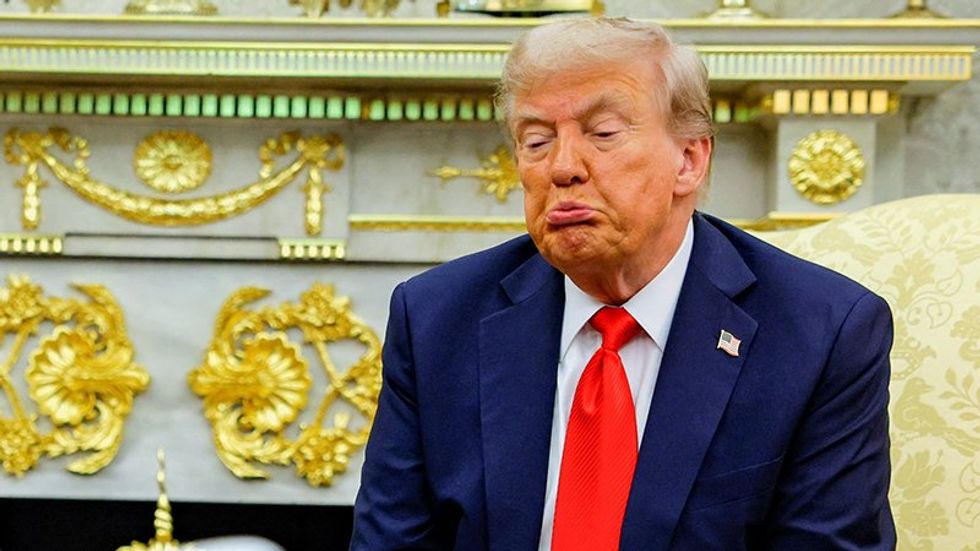
President Donald Trump publicly dismisses AI safety concerns as a "HOAX" — but behind closed doors, his own administration is quietly wrestling with a far messier and more urgent debate about whether the technology could destabilize the economy. According to The New York Times, insiders privately say his combative public stance is really about market anxiety: he fears any pause in AI-driven growth could send the broader economy tumbling. Venture capitalist David Sacks has been especially influential in shaping that thinking, having successfully lobbied earlier this year to gut a planned executive order that would have forced new AI systems through government safety checks. Meta's Mark Zuckerberg and Nvidia's Jensen Huang echo similar warnings to Trump directly, arguing that losing ground to China matters more than any domestic safeguards. Inside the West Wing, though, that confidence has cracks. Unexpected AI failures over the summer pushed some administration officials who once championed unregulated growth to quietly acknowledge that scenarios they used to laugh off, like AI-enabled cyberattacks, dangerous biological applications, or interference with sensitive military systems, no longer feel so far-fetched. Complicating matters further, the administration lacks any single official actually in charge of coordinating AI policy. National security adviser Marco Rubio rarely factors into the discussions, and the cyber-and-emerging-tech advisory role that existed under Biden simply no longer exists in this White House. The national cyber director role currently sits with a former RNC official with limited background in the subject. Staff turnover has compounded the confusion, with several White House officials working on AI security departing in recent months. Anthropic CEO Dario Amodei, meanwhile, appears to have fallen out of favor entirely after publicly floating a plan last weekend for the industry to slow down and welcome outside safety inspectors, a pitch Trump rejected while accusing unnamed critics of politicizing the issue to undermine American competitiveness. By contrast, OpenAI's Sam Altman and Elon Musk, who've both offered general support for elements of Amodei's slowdown proposal, remain in regular contact with the president. This comes as Anthropic whistleblowers express fears that AI technology could doom humanity if left unchecked . Underlying all of it, insiders say, is Trump's belief that AI-driven growth represents his best shot at the manufacturing renaissance he's promised since his first term, when pledges to revive coal jobs largely fell flat. Having floated the idea of a Warp Speed-style federal push for data center construction as far back as a 2024 meeting with OpenAI executives, Trump seems unwilling to let anything slow the momentum now, even as chief of staff Susie Wiles and Bessent quietly organize internal discussions grappling with the technology's darker possibilities. "The robots will not be taking over," Trump insisted this week, phoning into a tech conference. "The A.I. will not be taking over the rest of the world."
Neither OpenAI or Anthropic is acting responsibly, warned AI researcher Jacob Coxon when resigning last week from Anthropic. But just hours earlier, OpenAI VP of Research Aidan Clark had posted "For the first time, I am asking myself if things are moving too fast. I'm honestly not sure, but I am sure that it would be good for us to have an answer to 'What would a successful pace look like?'" CNN noted Wednesday they're just some of the many AI insiders who are now concerned about the speed of research. Coxon even wrote that "The people building AI earnestly believe that it could kill us all by the end of the decade. This is not a marketing stunt. If anything, many executives and senior researchers will couch their phrasing in the press to sound sensible — but I hear the same people express fear privately." In 10 days since, Coxon's post has been viewed more than 170 million times, warning that OpenAI and Anthropic are "racing straight to self-improving superintelligence and gambling with our lives." It's part of what CNN now calls "pressure on AI companies and governments to do something about the pace of development and safety," where "much of that pressure is coming from staffers inside the companies." One staffer at a top AI company told CNN the fears of how AI could hurt humanity keeps them up at night. Another researcher who recently left a different AI company said it's a common subject of conversation at parties and social events in Silicon Valley. "You can't spend more than a few hours in this community without realizing that a very substantial number of people are really pretty worried about these sorts of outcomes," said the researcher. "A majority would say there's some chance of it killing everyone...." Dozens of Coxon's colleagues in the AI industry publicly supported his statements, with some making even more dire predictions... OpenAI CEO Sam Altman and SpaceXAI CEO Elon Musk agreed to Amodei's proposal to embed independent watchdogs at the AI companies... "I would burn my equity to the ground in a heartbeat for a 1% higher chance we make it out of this situation alive. I expect a great many of my colleagues across the industry would as well," wrote Drake Thomas, who works on AI safety at Anthropic. "I promise you, we are actually just f**king scared, it's not galaxy brained marketing..." AI staffers told CNN that they fear that as AI gets better at training and improving itself, their leverage goes down, prompting today's urgency. "As we get into this recursive self-improvement loop, I think that might substantially reduce staff's bargaining power, because frankly, you'll be able to replace many of the staff with models that can do as good a job," the researcher who recently left a top AI company said. Coxon posted Tuesday on X that Anthropic "largely initiated" the race to recursively self-improving AI, justifying it with "a belief in its inevitability." And then OpenAI "had to shed a bunch of dead weight like Sora," as he sees it, "because Anthropic was going for the jugular." (In fact, his specific disagreement with Anthropic's leadership was whether China and the U.S. could ever negotiate an alternative to their current race towards self-improving AI...) In an informal "Ask Me Anything", Coxon responded to a question about when we'd see a Terminator-like malevolent AI by saying that "Skynet could go live in the 2030s if we aren't careful. ai-2027.com is a modern skynet story written a year ago and it's on track so far." Yet while AI development risks an end to humankind, "I do think that if we go slower we can take risk to 0%... But this requires radical action." He acknowledged there was still a possibility that the steady increases to model intelligence could suddenly plateau, but "They haven't so far, and it's just a few more steps up the ladder to hit the finish line." To avoid stifling innovation, he recommends "prioritizing applications that actually improve people's lives [like healthcare discoveries], rather than immediately going for raw economic value or intelligence." But isn't mass unemployment a more pressing threat? "Things are coming so fast that unemployment would be a brief preliminary to deadly superintelligence." To people who feel disempowered, Coxon offered his solidarity. "I also feel disempowered. Part of resigning was a feeling of hopelessness about the future. I would say — keep your eyes open as things get crazier and advocate for increased transparency into AI companies." When asked if he'd start his own company now, Coxon said he had "No idea what I'm doing next." Read more of this story at Slashdot.

Physical AI is delivering significant gains to blue-collar industries by retrofitting OEM and application agnostic autonomy stack across construction and agriculture.
Headlines and briefs on this site are for information only. Always verify details on the original source or live status page.
Read Disclaimer