

Brief
Travel14 Oct
New to Dubai? This is one place you need to visit with your kids!
Here's why OliOli deserves a spot on your Dubai family bucket list
GGulf News
Travel news, airline updates, tourism, railway disruptions, aviation, and booking platform changes.
Showing 415–432 of 676 stories
Here's why OliOli deserves a spot on your Dubai family bucket list
At Amman Design Week, Dima Srouji covers an ancient palace with glass snails and figs, using Palestinian glassblowing to understand archaeology, colonialism and craft through her installation.

Summary Frieze London 2026 brings a packed lineup of exhibitions, installations and performances across the city from October 14–18. Highlights include major presentations by Justin Caguiat, Tarek Atoui, Salman Toor and Issy Wood. Beyond traditional galleries, Slawn, JW Anderson and CART Department x Kozo blur the boundaries between contemporary art, fashion, design and public space. As Frieze London and Frieze Masters return to Regent's Park from October 14 to 18, the city's art scene is spilling well beyond the fairgrounds. Across London, major institutions, independent galleries and unconventional spaces are presenting a packed lineup of exhibitions, performances and installations. This year's highlights span everything from experimental sound and contemporary painting to large-scale interventions and collaborations at the intersection of art, fashion and design. Whether you're navigating the city between fair visits or looking to skip the tents altogether, here are standout presentations worth checking out during Frieze Week. Justin Caguiat, ‘Change Ringing’ at Serpentine SouthOctober 8, 2026 – January 10, 2027Justin Caguiat makes his UK institutional debut with ‘Change Ringing,’ an ambitious exhibition spanning painting, sculpture, printmaking, sound and film. Taking over Serpentine South, the presentation explores the relationship between art, architecture and the passage of time. Among the highlights are paintings made with heat-sensitive pigments that shift in color and appearance depending on their environment, alongside bronze bells cast in the forms of flowers and seeds. The result is an evolving exhibition that challenges the idea of an artwork as something fixed. Tarek Atoui, ‘Hold’ at Tate ModernOctober 13, 2026 – April 11, 2027Lebanese artist and composer Tarek Atoui transforms Tate Modern's iconic Turbine Hall into an expansive sonic environment for the latest Hyundai Commission. Titled ‘Hold,’ the installation brings together custom-built instruments, sculptural objects, electronics and percussion to create an evolving orchestra of sound and movement. Visitors are invited to experience the work through both listening and physical sensation, while a program of live performances will continually reshape the space. It's a monumental exploration of how music, architecture and human interaction can exist as one.CART Department x Kozo, ‘A World Within’ at The Peninsula LondonOctober 15–31, 2026 | The Peninsula LondonCART Department and The Peninsula London have teamed up with artist Kozo to transform six of the hotel's luxury vehicles into moving works of art. Titled ‘A World Within,’ the project sees Kozo bring his intricate visual language to a fleet of Rolls-Royces, Bentleys and other vehicles, drawing inspiration from London's rich cultural history, British nature and surrealist imagery. Blending elements of the past, present and future, each vehicle becomes a canvas for the artist's fantastical world, where familiar motifs take on unexpected forms. Unveiled during Frieze Week, the fleet will travel throughout London in October, bringing contemporary art off the gallery walls and onto the city's streets. Slawn, ‘Crane Painting’ with Saatchi YatesOctober 13, 2026 | Doon Street Car ParkNever one to follow the traditional gallery playbook, Nigerian-born, London-based artist Slawn takes his practice to an industrial scale with a special painting performance presented with Saatchi Yates. Staged at the Doon Street Car Park, the intervention brings together cranes, cars and the artist's unmistakable visual language, turning an everyday urban setting into an unconventional canvas. Known for bridging street culture, contemporary art and spectacle, Slawn continues to challenge where and how art can be experienced.JW Anderson, ‘A Composition’ in PimlicoOctober 15–20, 2026Jonathan Anderson brings together art, fashion and design for ‘A Composition,’ a special exhibition presented by JW Anderson in partnership with The Platinum Card by American Express. Taking place at the brand's Pimlico flagship, the presentation features new works by Cerith Wyn Evans alongside contributions from artists and makers within Anderson's creative circle. Highlights include ceramics by Akiko Hirai, paintings by Mary Stephenson and sculptures by Shawanda Corbett. The exhibition offers a closer look at Anderson's long-standing dialogue with contemporary art and craftsmanship, extending his creative vision beyond clothing and into the gallery space. Salman Toor, ‘Someone Like You’ at The Courtauld GalleryOctober 2, 2026 – January 10, 2027Salman Toor's first solo exhibition in Europe arrives at The Courtauld Gallery with ‘Someone Like You,’ bringing together 19 paintings created since 2019. Known for his atmospheric depictions of contemporary urban life, the Pakistani-American artist captures moments of friendship, desire, isolation and belonging through his signature palette of luminous greens and intimate interior scenes. Balancing tenderness with humor and unease, the exhibition offers a compelling look at how Toor navigates identity and human connection. Issy Wood, ‘Self-Portraits’ at the National Portrait GalleryOctober 9, 2026 – February 28, 2027British-American artist and musician Issy Wood turns the lens inward with a presentation of self-portraits at London's National Portrait Gallery. Created as part of the institution's Artist Focus series, the paintings explore intimacy, consumer culture and the complicated nature of self-representation. Through tightly cropped compositions, unusual perspectives and subtle distortions, Wood treats portraiture as a means of both revealing and concealing identity. The exhibition offers a more personal look at an artist whose practice moves fluidly between painting, music and contemporary culture. Rirkrit Tiravanija, ‘(situational awareness)’ at Pilar CorriasOctober 9 – November 14, 2026Rirkrit Tiravanija returns to Pilar Corrias with ‘(situational awareness),’ his fifth solo exhibition with the gallery. Presented at its Savile Row location, the show brings together new paintings and performance to examine the connections between British military history and the traditions of labor, craftsmanship and production associated with the famed tailoring district. Known for his socially engaged practice, Tiravanija approaches the gallery as a space for cultural exchange, drawing unexpected connections between historical narratives and the everyday rituals of making.

Explore 29 pavilions, 40,000 shows, and new dining spots at Global Village
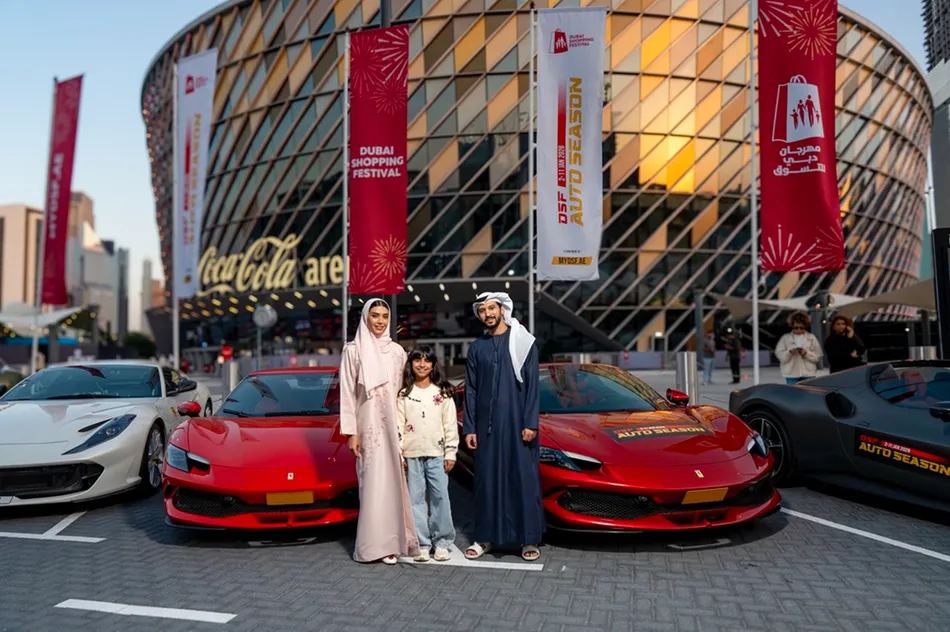
As thousands of residents and visitors set for out-of-this-world celebration

Every home visit allows me to rediscover the Philippines and aspects of our heritage.

Uniting private aviation and luxury through curated experiences in global wealth capitals
The partnership will provide Bahrain with greater opportunities to engage with global tourism leaders, policymakers and international institutions

From falconry and crafts to workshops and games, there’s plenty to explore
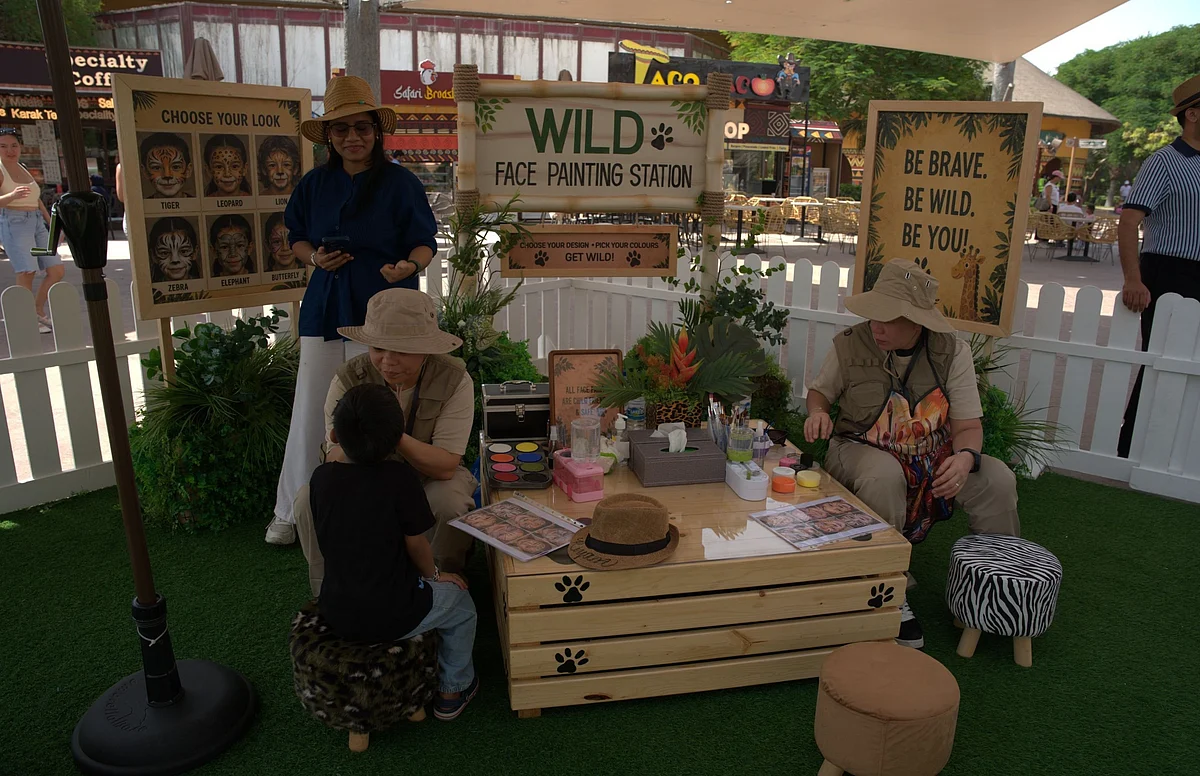
Dubai Safari Park reopens for Season 8 with family activities, wildlife encounters, safari tours, live shows and special opening-week events from October 12 to 18, 2026
At the new exhibition "A Way Through: Archive of Resilience" in Dubai, missile alerts, family photographs, poetry, diaries and handwork preserve the texture of ordinary life during conflict.

Conor fulfils Mia’s long-held dream of a private, candlelit proposal at One&Only The Palm

Experience the UAE's cultural heritage as Abu Dhabi Festival 2026 opens with a stunning UAE National Orchestra concert under 'The Wisdom of Culture' theme.

Prince Harry and Meghan are preparing to return to Nottingham, a city that holds a special place in their relationship. The Duke and Duchess of Sussex are due to visit the city on Thursday, 15 October, where they will reconnect with local charities using music, sport, mentoring and...

International visitors are discovering a different side of the Costa del Sol, travelling inland from Nerja and Torrox to explore […]
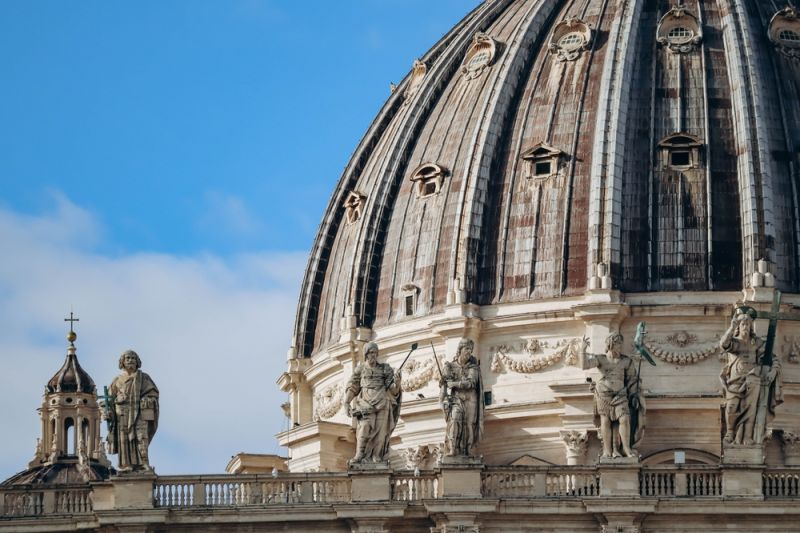
For centuries, workers hanging from ropes lit Michelangelo’s dome by hand every June, and the iron brackets that held the fire are still there Visitors who climb to the top of St. Peter’s dome, up the 537 steps counted by the Vatican, usually look out at the city. Those who look down along the ribs of the cupola spot something odd: a row of large, rusty metal spikes. They are what remains of one of Rome’s great spectacles. According to a Rome audio guide, the spikes were used to light up the dome. On the feast of Saint Peter, June 29, at a papal coronation or on another special occasion, rings of real torches and lanterns were arranged around the cupola, and often around other parts of the church and the colonnade. The Night the Dome Burned The best-known version of the ritual took place on the night of June 28-29. An auction house describes the event, in a note on a 19th-century painting of the scene, as an annual illumination of the basilica, and says it dates from 1481 under Pope Sixtus IV. The attribution to Michelangelo and Bernini that it also mentions should be treated with caution. The torches themselves are older: a Rome guide notes that they had been used to illuminate the church since the 14th century, with workers on simple ropes lowering and lighting them at the same moment. The effect was designed to be a surprise. According to a 19th-century account quoted by a Rome audio guide, at the stroke of half past seven a mass of red fire shot up from the dome to the cross, and countless lights burst out across the church in answer. A tour company describes the scene at dusk: 360 men, called sanpietrini, hung from ropes on the dome and the cross to light some 4,000 lamps and 1,000 large lamps filled with pitch and rosin. That is a secondary source, so treat the numbers as indicative. An Innovation in 1626 The big upgrade came with the consecration of the basilica on November 18, 1626, by Pope Urban VIII. According to Rome guides, the new church was lit with an enormous quantity of torches and lanterns, and the lanterns were a real innovation: braziers filled with fat and sawdust, which could burn for at least six hours and could be renewed. The show was such a success that the poet Giuseppe Gioacchino Belli remembered it centuries later. Goethe Was There Visitors wrote about it for generations. Goethe watched the illumination in 1780, during his first visit to Rome, and described a spectacle worthy of a fairy tale, according to the auction house’s note. The whole process of lighting everything took roughly an hour, and he found the finished effect almost unreal. A 19th-century English account describes the lighting of paper lanterns that looked like globes of fire, with the dome and colonnades drawn in lines of light. The End of the Torches The tradition did not survive the 20th century. Sources differ on exactly when it ended. The auction house says candlelight was used until the mid-1930s, when the dome was electrified, while the tour company says the climbers were still at work until 1937. The safest summary is “until the 1930s.” The same auction note adds that the celebrations stopped in the second half of the 20th century and returned in 2009 under Benedict XVI, though it does not say in what form. Michelangelo’s Dome Today The dome that carried the fire is itself a Renaissance story. According to the Vatican, Michelangelo designed it in 1546, work stopped at the drum when he died in 1564, the vault was completed in May 1590, and the gilded bronze lantern was finished on November 18, 1593. The spikes, on the other hand, were never meant to be seen as decoration. They were scaffolding for light. Lighting is still being updated. In March 2025, the Fabric of St. Peter began renewing the lighting of the dome with new fixtures meant to illuminate the drum more intensely and evenly, as reported by Vatican News.
Reflections on Hemingway, reclaimed land, and a long-awaited evening in Malate Details

The United States Luxury Heritage Craft Experiences market refers to the industry focused on premium, immersive experiences that connect consumers with traditional craftsmanship, cultural heritage, artisanal skills, and historically significant creative practices across the United States. These experiences include private
Headlines and briefs on this site are for information only. Always verify details on the original source or live status page.
Read Disclaimer