'Simple and intuitive': Apple tells us about its approach to the new Readiness score on the Apple Watch — and how it differs from everyone else

·2h ago
Share:PostShare

'Simple and intuitive': Apple tells us about its approach to the new Readiness score on the Apple Watch — and how it differs from everyone else Yahoo Tech Apple Watch Series 12 Review: I’m Loving the Subscription-Free Life CNET The Apple Watch Series 12 is the start of a new wearable era The Verge Apple Watch Ultra 4 In-Depth Review: Does it Match the Hype? DC Rainmaker How to turn off the new 'always listening' feature on Apple Watches USA Today

G

Google News

Original source

Read full story

apple watch

Check live status on DownRightNow

Check status →

Related Stories

Acelot Announces Initiation of Dosing in Phase Ia Clinical Trial of ACE-2223, a First-in-Class Oral Small Molecule Targeting Aggregated TDP-43 in Amyotrophic Lateral Sclerosis (ALS)

SAN FRANCISCO--(BUSINESS WIRE)--Acelot, a biotechnology company developing small molecule therapies for challenging targets in diseases with high unmet need, today announced the initiation of the Phase Ia clinical trial of ACE-2223 to evaluate its safety, tolerability, and pharmacokinetics in healthy adults. The first-in-class, orally bioavailable small molecule, ACE-2223, is designed to specifically bind to and disrupt aggregated TDP-43, a dysfunctional protein present in approximately 97% of

BBusinesswire

The Apple Watch Series 12 is the start of a new wearable era

The Apple Watch Series 12 is the start of a new wearable era The Verge The Apple Watch 'Always-Listening' Features Should Worry Every Lawyer, Expert Says Law.com iOS 27.2 Beta Previews New Apple Intelligence Health App MacRumors Apple Watch Series 12 Review: Catching Up And Catching Heat engadget.com How to turn off the new 'always listening' feature on Apple Watches USA Today

GGoogle News

AI will Make your worst leadership habit permanent

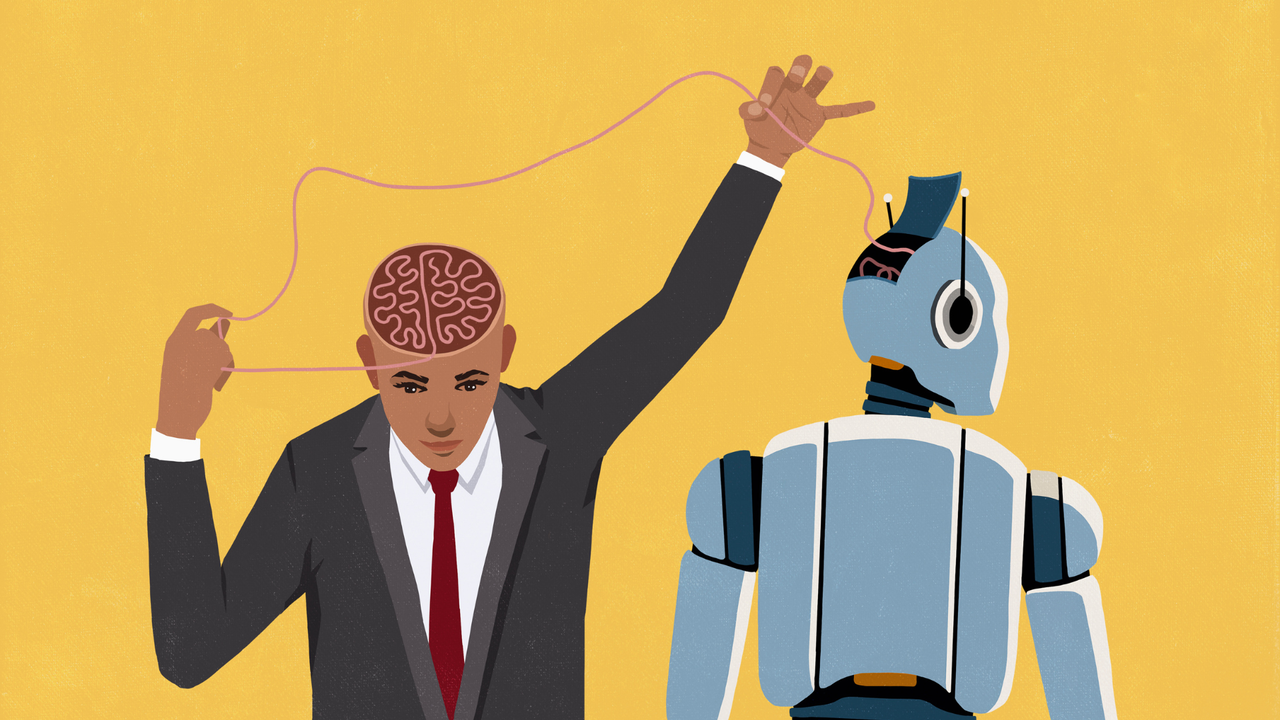
Last quarter, two people on the same leadership team turned on the same AI tool. One had a stalled project and asked the tool to draft a status update that downplayed the trouble. He received a clean, confident response that read as finished. The dashboard interpreted it as complete and the trouble vanished. The other leader was weighing a hard call. Her team named the risks, bad numbers, objections, and the parts that weren’t working. She handed the tool an honest picture of the decision, and it compressed what used to take three weeks of meetings into a single afternoon because everything it needed to be right was already on the table. They were using the same technology inside the same company in the same week. What came out of each of their hands was simply whatever had already been running underneath, long before the tool arrived. Every major technology leap forward has done the same thing. It took whatever was running inside the leadership and made it faster, more visible, and much harder to hide. AI is just the quickest, least forgiving version. A LEADER’S SOURCE CODE Most AI conversations happening in boardrooms are technology, budget, and competitive positioning conversations. It’s almost never a discussion about what is generating the results underneath all of it. After two decades inside founder-led companies, I call this the leader’s source code. When I talk to leaders about their source code, I’m talking about the automatic pattern running underneath how they lead: how they process uncertainty, where their attention goes under pressure, what they reward and avoid without meaning to. Your team learns your source code by watching what gets rewarded and what gets punished, and they build the real system around it. Whatever technology your company adopts simply plugs into that system and runs on it. You can see this in something as ordinary as a meeting summary. Put an AI notetaker in a meeting where disagreement gets smoothed over before anyone says it plainly, and it will faithfully capture the smoothed-over version. The Monday summary reads, “team aligned on Q3 priorities.” But three people in that room weren’t and they said nothing. Two weeks later the initiative stalls, and the summary gets cited as proof everyone signed on. The friction resurfaced as a decision nobody remembers making and nobody feels responsible for it. Or take decision automation. A founder automates approval routing to free up their own time. Six months later, every approval still lands on their desk, because the workflow was built around their sign-off in the first place. The bottleneck didn’t go away. It got faster, and harder to see. BUILD THE FOUNDATION FIRST The pressure to adopt is real, and it isn’t letting up. A Bloomberg survey of more than 300 senior financial services leaders found that nearly half believe their firm risks losing market share if it falls behind on AI. McKinsey’s most recent workforce research found that trust in leadership is one of the strongest indicators of whether people feel ready for AI. Yet about one in five employees say AI-related changes at work make them anxious. Leaders can quiet that anxiety for a moment by promising that no jobs will be lost, but if roles later disappear, the promise becomes evidence that people were not told the truth. Trust and fear can exist at once, inside the same building, often inside the same person. That tension is the product of a leader’s source code, and it’s what AI is about to run on top of. This is the part most AI rollouts miss—an established, healthy source code where authority was distributed and the truth moved fast before the tool arrived. The highest leverage move before your next deployment is knowing what your own source code is currently running. So how do you read your own source code before the next tool scales it? These three tests will show you. The empty-room test. Watch what happens to decision speed when you leave the room. If things slow down or stall until you’re back, authority isn’t distributed. Automate on top of that and you make the bottleneck faster and harder to see. The bad news test. Notice whether problems get named or routed around. A team that brings you bad news early has built trust. A team that works around what’s broken has learned that naming it costs more than hiding it does. Whichever pattern you have, your next tool will scale it faithfully. The early warning test. Ask yourself when you find out something has gone wrong, at the first sign of trouble or only once it’s past the point of no return. That gap is the clearest read available on what any tool you adopt next is about to amplify. None of these shows up on a dashboard. These appear in what your organization does automatically, under pressure, when nobody’s performing for the room. AI won’t interrupt that pattern. It will run on it, faster than any team can correct if the pattern wasn’t healthy to begin with. FINAL THOUGHTS Strategy is hard to change, and markets are impossible to control, but your source code is the one thing you can genuinely update. When the leader updates, the system updates. So, before the next line item is added to the AI budget, explore whether the source code it’s about to scale is one you’d stake every decision, hire , and workflow on. If it isn’t yet, that’s your work. And it’s the one thing the tool can’t do for you. Elaine Mak is the CEO of Elaine Mak & Co.

FFast Company

AI expands access to workforce services

Artificial intelligence is reshaping workforce service delivery, enabling public employment systems to become more proactive, personalized, and responsive. Workforce agencies are using AI to match individuals with job openings, identify transferable skills, recommend career pathways, assess service needs, generate résumés, support interview practice, and provide tailored job-search guidance. AI-powered assistants can also answer common questions, support registration and applications, and extend services beyond traditional business hours. As AI becomes more integrated into workforce services and the broader labor market, preparing workers to use these technologies is becoming equally important. Earlier this year, the U.S. Department of Labor encouraged state and local agencies to use Workforce Innovation and Opportunity Act funding to help workers of all ages build foundational AI skills . This guidance underscores the public workforce system’s growing role in preparing workers to succeed in an increasingly AI-driven economy. AI SKILLS AND WORKFORCE INNOVATION New funding opportunities are supporting the broader adoption of artificial intelligence across workforce development programs, helping organizations modernize services and expand access to education, training, and career pathways. These investments can provide financial support, technical assistance, and resources to develop AI-powered tools that improve how individuals connect with emerging opportunities. Building on this momentum, the U.S. Department of Labor has also announced a national contracting opportunity to expand AI skills training within Registered Apprenticeship programs. The initiative will support updated curricula, AI-related occupations, and stronger talent pipelines in critical industries such as advanced manufacturing, telecommunications, and data centers, helping workers gain the AI literacy and technical skills needed for the jobs of the future. A MORE RESPONSIVE WORKFORCE SYSTEM When implemented responsibly, AI can strengthen the workforce ecosystem by helping job seekers connect to employment, training, and supportive services, improving employer candidate matching and communication, and reducing administrative burdens for workforce professionals. AI can also analyze labor market data to identify skill needs, growing occupations, and effective service strategies, helping agencies deliver more targeted and responsive support. PEOPLE, PROGRAMS, AND OPPORTUNITY AI could also help workforce systems become more proactive and personalized. Rather than waiting for individuals to request help, employment platforms could recognize changing circumstances, emerging skill gaps, or potential employment risks and recommend relevant services before someone becomes disconnected from the workforce. AI could also generate continuously updated career pathways based on a person’s experience, interests, location, barriers, local labor demand, and available training. These tools could show users not only which jobs they qualify for today, but also which skills, credentials, or experiences could help them advance into higher-paying occupations. The U.S. Department of Labor has made workforce adaptability and AI literacy central to its approach to the future of work. Its efforts include analyzing AI’s labor-market effects, incorporating AI competencies into workforce programs, and helping state and local systems respond as employer requirements evolve. The National Association of Workforce Boards is translating that federal framework into practical resources for local workforce systems. In March 2026, NAWB and Microsoft Elevate announced a partnership offering free, LinkedIn Learning-based AI courses for job seekers, career coaches, and workforce agency administrators. Built around real-world workforce scenarios, the courses align with the Department of Labor’s AI Literacy Framework and focus on practical, role-specific skills. This partnership demonstrates how national guidance can be converted into accessible training for the people who interact with the workforce system every day. It also highlights the need to build AI capacity at multiple levels to help individuals use AI in their careers, equip frontline staff to apply it in service delivery, and prepare workforce leaders to govern the technology responsibly. THE NEED TO COMBINE TECHNOLOGY WITH HUMAN EXPERTISE AI could strengthen coordination across workforce development, unemployment insurance, education, human services, and economic development programs. More integrated systems could help agencies understand participants’ needs, reduce duplicate processes, and connect individuals with employment, training, benefits, and supportive services through a more unified experience. Advanced forecasting tools could also help workforce leaders anticipate layoffs, occupational shortages, emerging industries, and regional training needs. This would allow agencies to respond more quickly to economic changes. Ultimately, the greatest value will come from combining intelligent technology with the expertise and empathy of workforce professionals. AI should support human judgment, particularly when decisions affect program eligibility, service prioritization, or employment opportunities. One example of this is our work with WorkSource Georgia where we helped them develop a system that provides labor exchange, career services, case management, and program reporting for job seekers, employers, and workforce professionals. With the help of AI: Individuals can create résumés, search for jobs, explore training opportunities, and connect with workforce services. AI-powered tools help users tailor résumés and cover letters, prepare for interviews, and receive more relevant job matches. Employers can generate job descriptions and interview questions and identify qualified candidates more efficiently. Workforce staff can create more detailed case notes, correspondence and employment plans in less time while supporting more complete and consistent records. A LOOK AHEAD AI can provide immediate value when it is thoughtfully integrated into a secure, well-governed workforce platform. Its approach offers a model for agencies seeking to modernize service delivery, expand access to opportunity, and prepare workers and businesses for changing labor-market demands. The future of AI-enabled workforce services should be measured by how effectively technology helps people find opportunities, employers access talent, and workforce professionals deliver timely and meaningful support. With strong governance and continued human oversight, AI can help create a more accessible, agile, and effective public workforce system. Paul Toomey is the president and CEO of Geographic Solutions.

FFast Company

Headlines and briefs on this site are for information only. Always verify details on the original source or live status page.

Read Disclaimer