
BriefTechnology
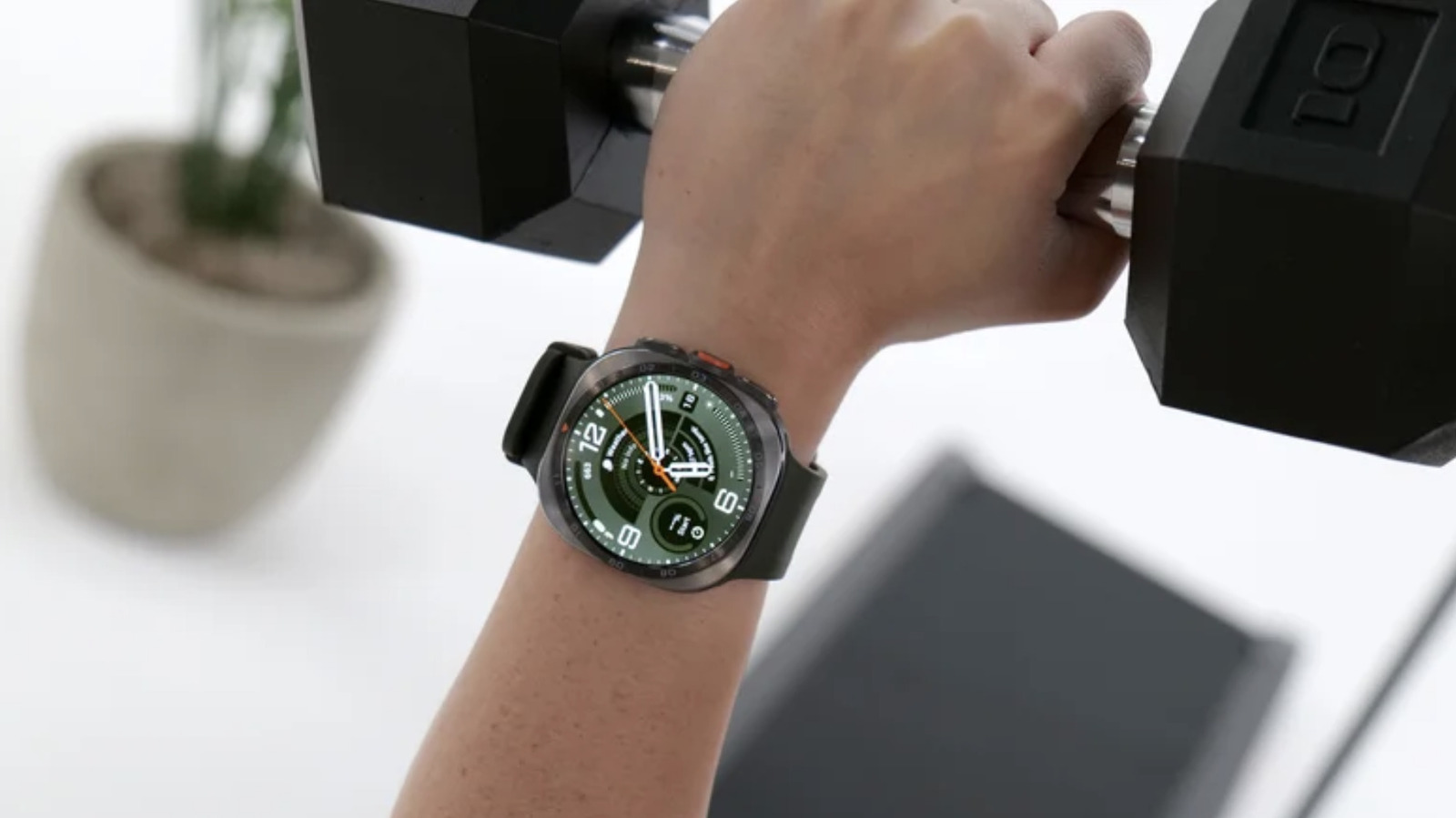
Here's everything you'll get with Apple and Samsung's latest high-end smartwatches.
E
Read full storyEngadget
Original source
Here's everything you'll get with Apple and Samsung's latest high-end smartwatches.
Engadget
Original source
I have spent 26 years in healthcare. I have watched apps launch, algorithms deploy, platforms get funded, and payment models get reinvented, all in the name of fixing American healthcare. Yet, millions of Americans still cannot get a timely doctor’s appointment. Emergency rooms remain the default care setting for people with nowhere else to turn. Provider shortages are accelerating. The system is breaking under the weight of its own complexity. The problem is that we have confused the tool for the solution. Technology is an enabler. Treat it as a destination and we will continue to build sophisticated solutions to the wrong problems. Consider the first and second generations of telehealth. The promise of removing distance as a barrier was correct in theory. In practice, the people who needed care most were often the least able to use it. Broadband gaps, device limitations, and the reality that a complex diagnosis needs more than a video call all worked against the premise. Telehealth solved for distance but not for infrastructure. This is not only a rural problem. Underserved America lives in the South Bronx and South Chicago, in the suburbs of Detroit, and the exurbs of Phoenix. Poverty, provider shortages, transportation barriers, and a fragmented system have made reliable, dignified care a privilege rather than a given, everywhere. Around 92 million Americans live in primary care health professional shortage areas (137 million are subject to mental healthcare professional shortages). As of 2021, the country needed up to 200,000 more physicians just to meet existing demand. No app closes a gap like that. Only infrastructure does. HEALTHCARE’S 5 INFRASTRUCTURE LAYERS Real infrastructure has five layers, and only one of them involves a building. 1. Physical infrastructure is where a patient and a clinician actually meet: clinics, urgent care centers, mobile units, and care stations. Without it, nothing else functions. 2. Workforce infrastructure is the pipeline of people who staff those sites: residency programs, loan forgiveness, scope-of-practice rules, and credentialing. We have chronically underbuilt this layer. 3. Financial infrastructure is the payment architecture that makes care in hard-to-serve markets sustainable. Fee-for-service was built for high-volume suburban practices. It is structurally misaligned with the economics of underserved care, and providers cannot survive where it stays unfixed. B2C at large in healthcare hasn’t worked. 4. Data infrastructure is the connective tissue that lets information travel with the patient. When a patient moves between care settings without shared records, that is a safety risk. 5. Trust infrastructure is the least tangible layer and the most important. In communities with long histories of medical neglect, trust must get built through consistency, cultural competency, and accountability over time. There is no technology shortcut for showing up. OTHER CONCEPTS TO KEEP IN MIND AI belongs in this picture, but the conversation about it is framed incorrectly. AI without a clear use case and accountability structure is not progress. In healthcare, AI’s job is to make clinicians dramatically better. Three AI uses matter most. Clinical decision support sharpens diagnosis and prescribing with population-level data no clinician could hold in their head. Ambient documentation frees clinicians from note-taking, so their attention returns to the patient in front of them. Lastly, agentic orchestration removes the administrative friction that frustrates the system, while making the experience before and after the visit easier for the patient. Here is the principle I keep returning to, and it does not bend. Empathy, judgment, and human relationship are the last mile of care. A patient is a person with a history, a set of fears, a context no algorithm fully captures. Deciding how to treat them takes a human being who is present, who listens, and who carries the weight that a clinical relationship demands. AI should make that human being extraordinary at their job. FINAL THOUGHTS If we are serious about solving healthcare access, we need a different approach. Instead of focusing on the technology we can deploy, we should be looking at the infrastructure gaps. We should consider what mix of physical presence, human capacity, and technology closes them. We need to determine how to give clinicians better information and a smoother process so they can focus entirely on the patient. Infrastructure first. Technology that serves it. Humans at the center. That is the model. It should be powerful enough to scale, intelligent enough to support its clinicians, and human enough to earn the trust of the patients it serves. The technology tools available today are the most capable this industry has ever had. Used well, they extend a clinician’s reach and make access real in communities that have waited decades for it. But the tools are how you deliver the answer. The people waiting for care deserve nothing less. Karthik Ganesh is CEO of OnMed.

When I unpacked a new Fairphone from its box, I noticed something that doesn’t come with any other phone: a screwdriver. The tool is one small part of the company’s bigger effort to make a phone that users can actually repair—and that lasts as long as possible. If your screen breaks, you can easily unscrew the case and replace it yourself. Using the same screwdriver, you can take out a total of a dozen components, from the USB-C port to the camera modules. The Netherlands-based company also spent years rethinking the supply chain, sourcing materials like Fairtrade gold and recycled metals. Fairphone has been selling phones in Europe for more than a decade, but the $650 Fairphone 6+ is the first to be available in the U.S. I spent the past week testing it out and considering whether it could ever persuade me to ditch my iPhone. [Photo: Fairphone] A phone you can actually fix The phone was designed from scratch to be simple to repair. I tried taking it apart; I’m not an especially handy person, but I was able to disassemble all of the replaceable parts in about 20 minutes. You don’t need any special knowledge of electronics, or anything other than the single screwdriver. Anyone who can put together Ikea furniture can do it, says Chandler Hatton, Fairphone’s CTO. The company wanted to change how people think about the products they own. “It’s something that’s so different from our contemporary relationship with consumer electronics,” she says. “This all stems from this idea of being able to open a device and, for example, download the source code. That also sounds scary to some people, but it’s actually not that scary.” The company offers a two-year warranty on the phone, with the option of an extended warranty for an extra three years; the battery, which isn’t expected to last as long, has a warranty of two years plus 14 months of an extended warranty. If you break something and have to buy the parts yourself, they’re relatively affordable. You can swap out a new screen for the Fairphone in minutes at home, rather than paying for labor at a store. The Fairphone screen costs around $90; a replacement iPhone screen can cost as much as $379. A replacement Fairphone battery costs around $40, versus as much as $129 for a new iPhone battery. [Photo: Fairphone] Making the phone so repairable meant rethinking how phones are typically fabricated. “We’re asking our suppliers as well as our own engineers to do something that’s quite different,” says Hatton. “We’re like, ‘Okay, take a step back from how you’ve been doing this for other brands, and think about how you design it from the ground up to make it accessible to someone that doesn’t have any special tools.'” Components inside the phone are grouped together in a way that makes it easy to remove the parts that are most likely to need replacement. The design also makes the whole phone easier to recycle at the end of its life. The approach comes with some minor trade-offs. To make a phone that’s as thin as possible, manufacturers glue parts together rather than using screws. Gluing a phone together also makes it more waterproof, but then it can’t be taken apart for repair. The Fairphone is slightly thick, but I liked the way it felt in my hand. And while it isn’t designed to go underwater, it’s safe to use in the rain, which is all that most people need from a phone. [Photo: Fairphone] The supply chain is part of the product Some of the work that went into the phone is hidden. The company has spent years working on the best way to source materials like cobalt, for example. The cobalt supply chain is notorious for human rights issues, including child labor. When Fairphone dove into the challenge, it decided not to avoid certain mines, realizing that they were an important source of livelihood. Instead it works closely with the community in places like the Democratic Republic of Congo to improve working conditions. “We’re really trying to lean into the hard problems, and then have conversations with the whole value chain, particularly the people that are working in a specific area,” Hatton says. More than half of the materials in the phone are recycled or fairly sourced, including recycled aluminum, copper, steel, tin, indium, nickel, plastics, and rare earths. Though some other companies are also increasing the use of responsibly sourced materials, Fairphone is going farther, and trying to lead the rest of the industry to follow. The new phone comes in a shade that the company calls cobalt—a deep, saturated blue that looks like traditional cobalt paint—as a color option. The other colors, black and forest green, look more ordinary; the cobalt stands out enough that it’s possible to imagine people noticing and asking about the phone. The company isn’t necessarily trying to spark conversations about cobalt mining, Hatton says, but it’s a subtle nod to the work the company is doing in the supply chain. For many of Fairphone’s customers, the commitment to making a phone ethically is the biggest selling point. Given the choice, who wouldn’t want a phone made from materials that don’t destroy the environment by workers who are fairly paid? (Some European customers are also driven by the fact that the company is Dutch, at a time when American brands are increasingly unpopular globally because of Donald Trump.) Still, for all but the most diehard fans, the phone has to have the right level of performance to compete. On that front, it’s a good but not-quite-perfect product. [Photo: Fairphone] Repairability isn’t everything First, a disclaimer: Every smartphone I’ve ever owned has been an iPhone. I’ve never been unhappy enough with Apple to want to switch. In some ways, though, I’m the ideal potential Fairphone customer. I try to keep phones as long as possible. My current phone is a relatively ancient iPhone SE, which I’ve kept both because I like the tiny size and because it still works; if I could keep a phone forever without losing performance, I would. I’ve never been tempted to buy the latest high-end phone. The new Fairphone is a decent midrange phone. With light use, the battery lasted even longer for me than the two days that the company says is possible (with video calls and other more intensive use, the charge dropped faster). It comes with 12 gigabytes of RAM and 256 gigabytes of storage, which can be expanded to a generous 2 terabytes using a microSD slot. The organic light-emitting diode (OLED) screen is sharp and bright. The company’s software support lasts until 2033. “Our goal is to offer these phones in large volumes to people all over the world, so we need to make sure that we meet the customer where they are, and often they’re buying a phone based on specs and not based on their conscience,” says Hatton. On the side of the phone, there’s a bright yellow-green switch that turns on a unique feature called “moments,” which lets you limit yourself to a handful of apps—such as the camera, maps, phone, etc.—when you’re working or with friends and want to avoid looking at your phone. If you don’t find that useful, you can program the switch to do something else, like turning on and off the flashlight. For the most part, the phone works decently—but it does have some flaws. First, I was surprised to learn that it isn’t compatible with Verizon, the phone carrier that I and more than a third of other Americans use. (It’s compatible with T-Mobile and AT&T , though.) Verizon hasn’t whitelisted the device, and it doesn’t support LTE Band 13, one of Verizon’s main coverage bands. Technically, you could try to use it, but coverage would likely drop. While the company couldn’t comment on Verizon specifically, it told me that it’s in conversation with multiple carriers in the U.S. The camera (including a 50-megapixel main camera, 13-megapixel ultrawide camera, and 32-megapixel selfie camera) doesn’t compete with the image quality on higher-end phones, or even some similarly priced phones. I quickly found a few bugs in the phone’s bare-bones version of Android. When I first took a couple of photos, for example, I could open only one of them, and it didn’t open correctly with editing tools until I refreshed some cookies. Navigation felt clunkier than my iPhone. On Reddit, Fairphone owners have reported everything from dropped Wi-Fi connections and issues with the fingerprint sensor to problems using Google Wallet on public transit. The speaker quality isn’t great. (Sadly, like most phones, the Fairphone doesn’t include a headphone jack, so if you want to listen to music or watch movies on it, you’ll probably want Bluetooth headphones.) The fingerprint sensor is somewhat awkwardly placed and didn’t always recognize my finger when I needed to lock or unlock the phone. Some owners have reported that the volume buttons, which are also awkwardly placed, can sometimes fall off—ironically, this seems to be one of the few components that Fairphone doesn’t sell for repair. Fairphone has committed to five years of software support as a key part of its approach to making a phone that lasts longer that usual. “It’s really important that if you’re offering people something that has a software component that you are also supporting that software for the long term,” says Hatton. But some critics have pointed out that the phones have privacy and security issues , partly because the company has been slow to roll out much-needed patches. For people who don’t want to use Android, Fairphone sells a version that uses e/OS , a privacy-focused, open-source operating system that can run standard Android apps but removes Google’s tracking. But e/OS also lags on security and some Android apps might not run perfectly on it. Before testing the phone, I was considering making the switch. I’m still considering it, because I love the repairability—but for now, I might just get another new battery for my aging iPhone.
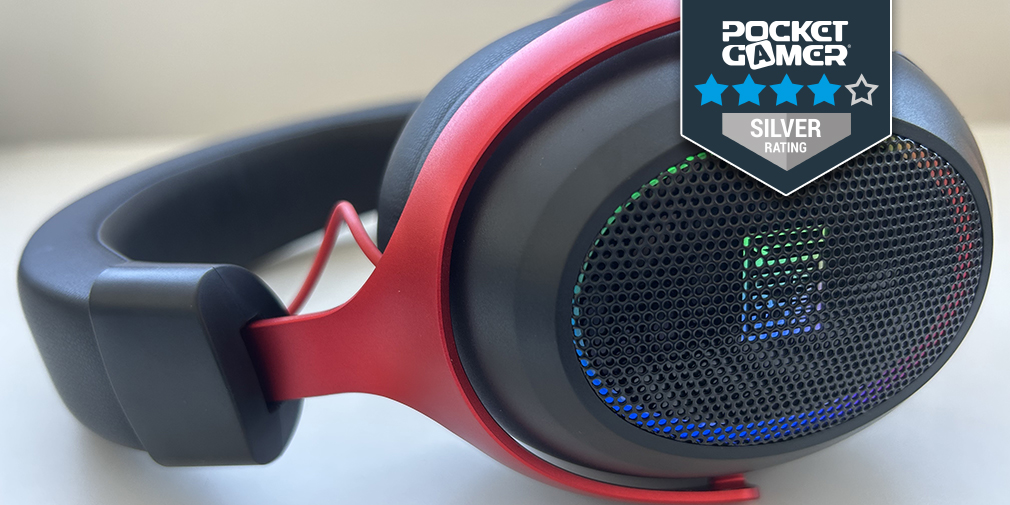
The Epomaker GX1 Headset was created by a company that is best known for its keyboards, but those who have a keyboard often need a headset as well - it's just part of the gear at this point. The Epomaker GX1 Headset is an affordable headset with great sound quality, aimed at the everyday listener (or gamer!) with a bit of flashy light on the side. This headset does have a little bit of its own flair to it; the red metal and wire details, the rainbow light inside the earmuffs at the side, and the cage around the logo (which does make the logo hard to read) do feel a little on the gamer side. However, the headset itself is mostly black, with a removable, included microphone. If you don't like the removable microphone, there's also a built-in microphone that allows you to still chat, though the detachable one is clearer. ... [ MORE ]

Getting past the ceiling requires a shift in how leaders think about their overall processes, and how AI should be involved.
Headlines and briefs on this site are for information only. Always verify details on the original source or live status page.
Read Disclaimer